
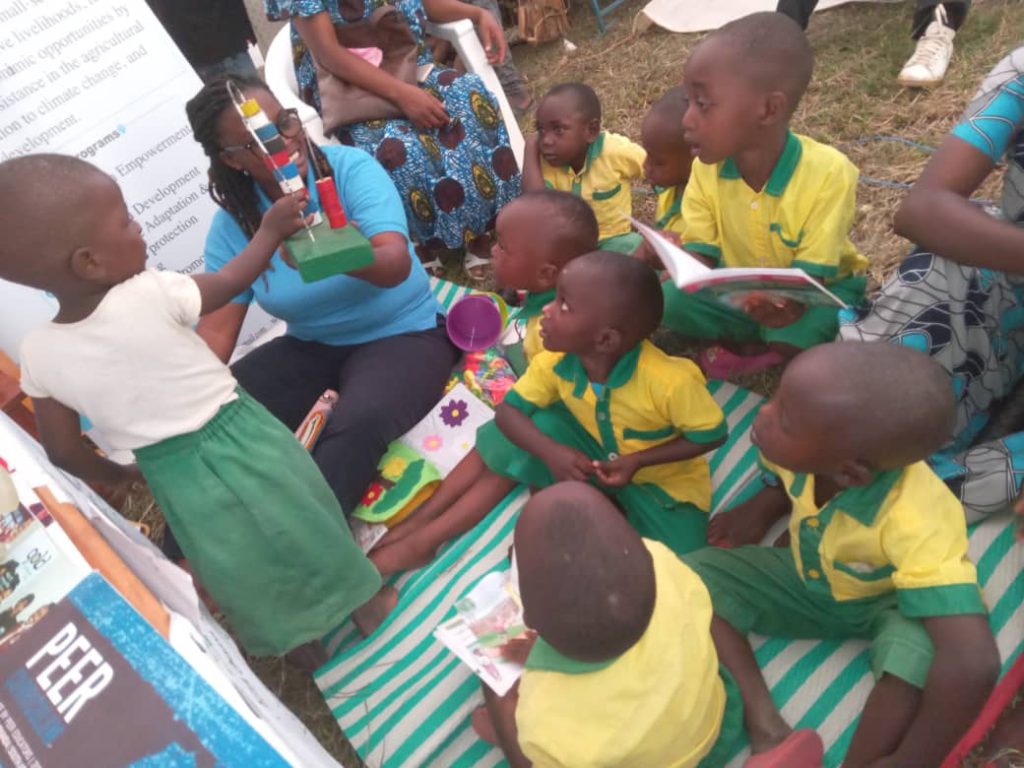
In 2026, the conversation around Early Childhood Development (ECD) in Rwanda has graduated from “social welfare” to “hard economics.” For too long, ECD centers were viewed primarily as places for children to play.
The logic is simple but powerful: ECD centers solve a “dual-generation” problem. They build the human capital of the future generation (the children) while simultaneously unlocking the economic potential of the current generation (the parents).
This blog post explores how investing in childcare is one of the most intelligent economic decisions a family—and a nation—can make, supported by data that proves the return on investment is undeniable.
1. Unlocking Women’s Labor Force Participation
The most immediate economic impact of an ECD center is on the mother. In Rwanda, women are major financial contributors, particularly in agriculture and cross-border trade. However, the “unpaid care burden” often forces women to work fewer hours or to choose lower-paying jobs that allow them to care for their children.
- The “Time Poverty” Solution: When a safe ECD center is available, a mother regains 4 to 6 hours of productive time each day. Research by the World Bank and UNICEF in Rwanda has shown that access to childcare can significantly boost mothers’ employment rates and earnings.
- NST2 Alignment: This directly supports the NST2 goal of creating 1.25 million decent jobs, as it allows women to transition from subsistence work to formal employment or entrepreneurship without sacrificing their children’s safety.
2. The ROI of Early Years: $1 In, $17 Out
From a long-term economic perspective, stunting and lack of stimulation are expensive. A child who is stunted today will earn less as an adult, reducing the nation’s future GDP.
- The Investment Case: Data shows that for every $1 invested in quality early childhood development, the return to society can be as high as $17. This return comes from better health outcomes, reduced crime, and significantly higher lifetime earnings for the child.
- Vision 2050: By targeting a reduction in stunting from 33% to 15% under NST2, Rwanda is essentially “saving” billions of Francs in future healthcare costs and lost productivity.
3. Job Creation for Youth: The Care Economy
ECD centers are not just places where parents leave children; they are places where youth find jobs. As the government aims to increase pre-primary enrollment from 35% to 65% by 2029, the demand for trained professional caregivers is exploding. This is creating a new sector of the economy: the Care Economy.
RODI’s Contribution: Building a Professional Care Workforce
At the Rwanda Organization for Development Initiatives (RODI), we are proving that ECD is a viable path to employment for youth. We don’t just advocate for ECD; we build the workforce that powers it.
Our ECD Caregiver Short-Course Training Program, implemented in partnership with the National Child Development Agency (NCDA) and districts like Ruhango, transforms unskilled youth into certified professionals. The economic data from our program speaks for itself:
- 95% Employment Rate: Of the 82 caregivers we have trained, 95% have secured employment within 1 week. This is one of the highest placement rates in the sector.
- Diverse Career Pathways:
- 60 graduates are employed in formal ECD centers.
- Primary Schools have hired 18 graduates to support early learning.
- 4 graduates have become entrepreneurs, launching their own private ECD centers that currently serve 156 children.
By training these youth, RODI is achieving a triple win: Jobs for youth, Care for children, and Freedom for parents to work.
Conclusion: The Smartest Investment
In 2026, an ECD center is more than a nursery. It is a catalyst that allows a mother to trade, a youth to earn a salary, and a child to grow into a productive citizen. Investing in ECD is not charity; it is the engine of Rwanda’s sustainable economic development.
