
As Rwanda accelerates through the implementation of the Second National Strategy for Transformation (NST2) in 2026, the nation’s eyes are firmly fixed on the horizon of Vision 2050. The national goal is ambitious and clear: to transform Rwanda from a developing country into a high-income, knowledge-based economy. To achieve this, the government is investing heavily in “hard” infrastructure—roads, schools, internet connectivity, and hospitals. However, infrastructure alone does not build a nation; people do.
The actual engine of Rwanda’s future transformation is its greatest demographic asset: its youth. With an overwhelmingly young population, Rwanda is poised for a massive “demographic dividend.” Yet, this dividend is not automatic. To turn a young population into a productive workforce, a responsible citizenry, and a generation of innovators, we must invest in the “software” of development: Leadership Skills and Positive Behavior Change.
In the landscape of 2026, academic excellence is no longer enough. For a student to thrive in the modern world, they must possess more than just high marks in physics or history. They must have the ethical grounding, critical thinking capabilities, and emotional intelligence to lead their communities. They must be resilient, self-reliant, and driven by a clear sense of purpose. This blog post explores why character education and leadership training are the critical missing links in achieving sustainable development, and how targeted interventions are preparing the next generation of Rwandans to take the reins of their future.
Behavior Change: The Cultural Foundation of Vision 2050
Vision 2050 envisions a Rwanda characterized by unity, self-reliance, and integrity. These are not just political slogans; they are behavioral traits that must be cultivated intentionally in every home and classroom. The transition to a knowledge-based economy requires a fundamental shift in mindset—a “cultural upgrade” that empowers youth to move from being passive beneficiaries of aid to active architects of their own destiny.
1. From Passive Consumers to Proactive Problem Solvers: Traditional education models often focus on teaching youth what to think—memorizing facts to pass an exam. Leadership education, however, teaches them how to think. For Rwanda to innovate, we need self-motivated, problem-solving youth. We need young people who look at a problem in their community—be it soil erosion or lack of electricity—and ask, “How can I solve this?” rather than “Who will solve this for me?” This shift from passivity to proactivity is the essence of the behavior change required for Vision 2050.
2. Ethical Citizenship and Social Responsibility: “Good behavior” in the context of national development goes far beyond simple politeness. It encompasses a deep respect for Human Rights, a commitment to Gender Equality, and a rejection of harmful social practices. A youth population that rejects drug abuse, avoids teenage pregnancy, and champions inclusivity is a population that contributes to the economy rather than burdening the social welfare and healthcare systems. Ethical citizenship means raising a generation that understands their rights but also their responsibilities to their neighbors and their nation.
3. The Power of the “Multiplier Effect”: Behavior change is contagious. When one influential young person adopts positive behaviors—whether it’s saving money, advocating for girls’ education, or volunteering to clean their neighborhood—they create a ripple effect. This “peer-to-peer” influence is often far more potent than any billboard, radio campaign, or teacher’s lecture. Adolescents listen to adolescents. By harnessing this dynamic, we can rapidly scale positive behavior change across entire districts, creating a critical mass of youth aligned with the values of self-reliance and dignity.
RODI’s Contribution: Cultivating Character from the Classroom to the Community
At the Rwanda Organization for Development Initiatives (RODI), we understand that leadership is not a title bestowed upon the few; it is a skill set that must be accessible to the many. We are actively working on the ground to equip young Rwandans with the tools they need to lead themselves and others.
Our contribution is delivered through three distinct but complementary programs targeting different districts and different stages of life:
1. The Gold Youth Peer Education Program (Ruhango District)
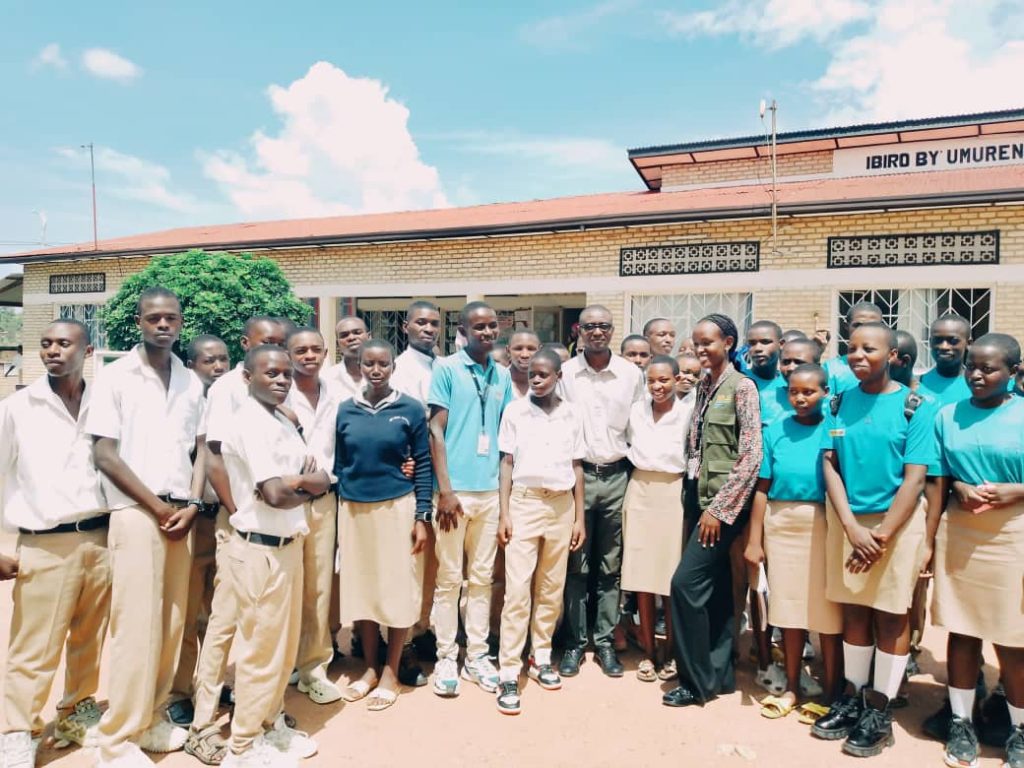
One of our flagship interventions for adolescent leadership is the Gold Youth Programme. Implemented in partnership with the Gold Youth Development Agency and the Ruhango District administration, this program leverages the immense power of peer influence through a structured, multi-year leadership pipeline.
- The Strategy: A Journey of Growth. We operate primarily in the Byimana and Ruhango sectors, collaborating with schools such as GS Ruhango Catholique, GS Muyange, and GS Bukomero. Unlike one-off trainings, our model is built on a continuous progression path that mirrors the students’ academic growth:
- Junior Peer Educators (S4): We identify and train Senior 4 students as “Junior Peer Educators.” They begin their journey by learning the basics of leadership and behavior change.
- Senior Peer Educators (S5): As they advance to Senior 5, they are promoted to “Senior Peer Educators,” taking on more responsibility in facilitating sessions and organizing activities.
- Mentor Peer Educators (S6): In their final year (Senior 6), they become “Mentor Peer Educators.” At this pinnacle stage, they not only lead their peers but also guide the incoming Junior Peer Educators, ensuring the knowledge is passed down.
- The Support Structure: To ensure quality and consistency, these student leaders are not left to their own devices. They are directly supported by Facilitator Interns, who provide mentorship and logistical help. These interns, in turn, are coordinated by a dedicated Site Facilitator who oversees the program’s strategic implementation across the schools.
- The Curriculum & Impact: These students undergo rigorous training in Human Rights, Gender Issues, Child Abuse Prevention, and Leadership. By 2026, we will be empowering 35 peer educators per site. This structured hierarchy ensures that leadership is not just learned, but practiced daily.
2. ECD Monitoring and Supportive Supervision (Ruhango District)
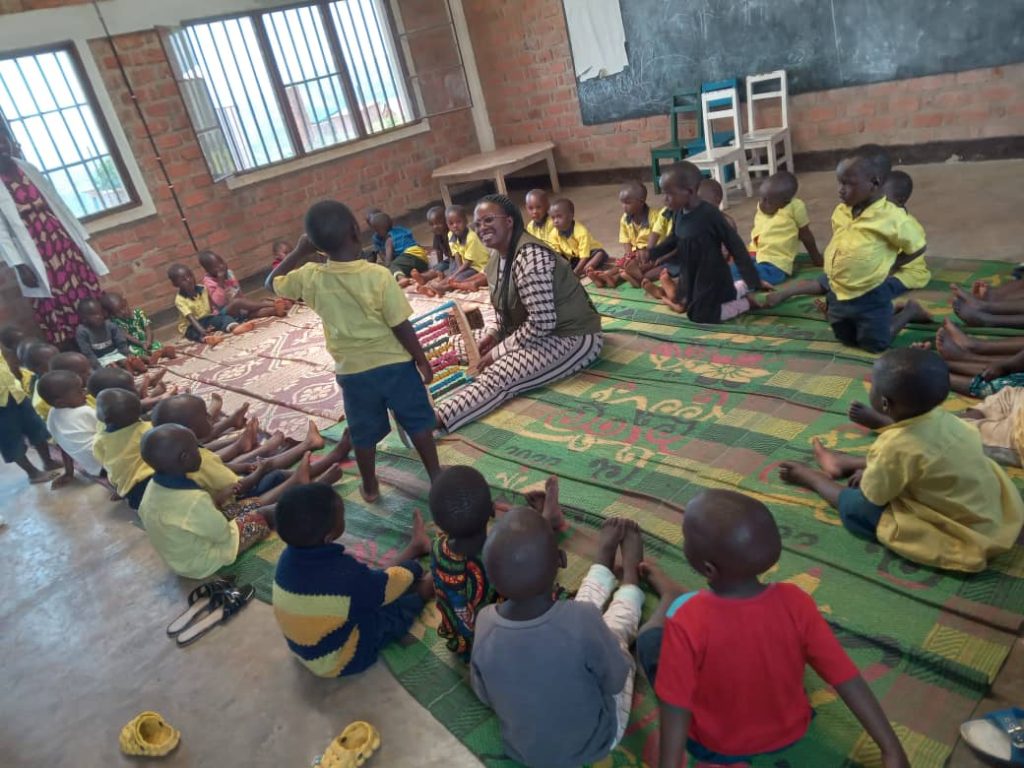
While the Gold Youth program targets adolescents, RODI also runs a separate, vital initiative in Ruhango District focused on the very foundation of human capital: Early Childhood Development (ECD).
We recognize that simply opening an ECD center is not enough; the quality of care determines the child’s future. Therefore, in Ruhango, RODI implements a comprehensive Monitoring and Supportive Supervision project.
- Scope: We provide consistent oversight to Home-Based, Community-Based, and Center-Based ECDs facilities across the district.
- The Intervention: Our teams visit these facilities to offer coaching—not policing. We ensure that caregivers maintain high hygiene standards to prevent stunting, engage in positive stimulation to boost cognitive growth, and utilize learning materials effectively. By supporting these facilities in Ruhango, we ensure that the youngest children receive the quality care they need to grow into the leaders of tomorrow.
3. The LIFT Project: A Consortium for Inclusion (Rusizi District)
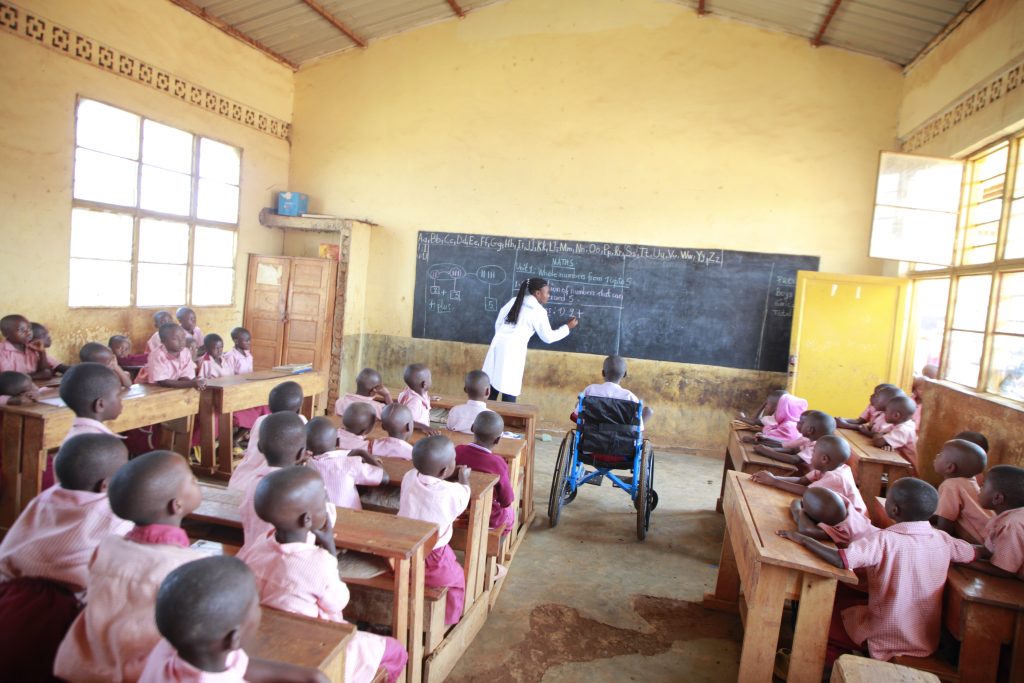
Distinct from our work in Ruhango, RODI is implementing the Learning and Inclusion for Transformation (LIFT) project in Rusizi District. This project is specifically designed for Out-of-School Children and Youth (OOSCY).
Crucially, this is not a solo effort. We implement LIFT in a powerful consortium alongside ADEPE and UPHLS, ensuring a holistic approach that leaves no child behind.
- The Challenge: In Rusizi, many children have dropped out of school due to poverty, disability, or social exclusion.
- The Consortium Approach: By pooling our expertise, we address every barrier. While RODI focuses on education management, ADEPE brings expertise in social protection to support families, and UPHLS ensures that children with disabilities are identified and included.
- The Intervention & Impact:
- Alternative Learning Pathways (ALP): We manage ALP centers that provide accelerated learning for those too old to return to Primary 1. Through this intervention, we have successfully enrolled 974 children, giving them a second chance at literacy and life skills.
- Back to School: For those eligible to reintegrate into the formal system, we have facilitated the direct return of 542 children to formal schools, providing them with the materials and support needed to stay in class.
Conclusion: A Generation with a Purpose
The youth of 2026 are the architects of the Rwanda of 2050. But architects need training, tools, and a blueprint.
By investing in the structured leadership of Peer Educators in Ruhango, ensuring Quality ECD Supervision in Ruhango, and championing Inclusive Education in Rusizi, RODI is providing that blueprint across the lifecycle. We are raising a generation of educated, self-motivated, and well-behaved youth who have a clear purpose in life.
When we see a Mentor Peer Educator in S6 guiding a younger student, or a child in Rusizi returning to school after dropping out, we are seeing the future in action. We are building the character of a nation.
