
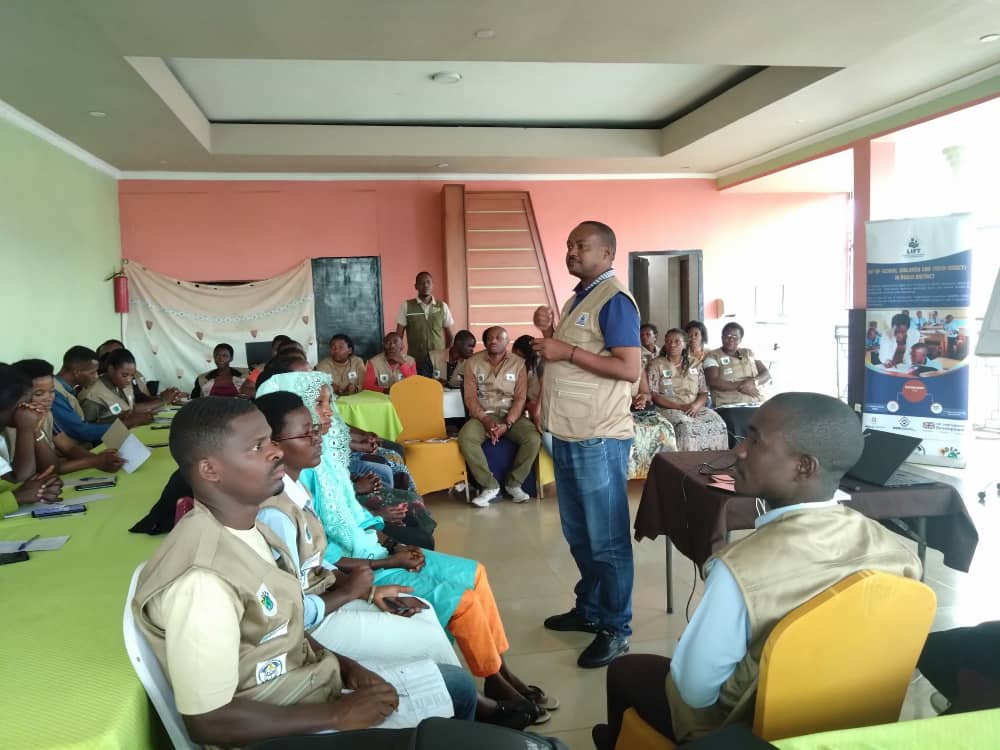
In the complex landscape of development in 2026, we often focus on the “hard” assets: the number of classrooms built, the amount of money transferred to a savings group, or the kilograms of seeds distributed. While these inputs are vital, they are static. They do not move themselves. They do not convince a skeptical parent to send their child back to school, nor do they encourage a refugee to start a business after years of dependency.
The bridge that connects these resources to the people who need them is the Community Mentor.
Whether they are called “Case Workers,” “UPG Coaches,” or “Peer Mentors,” these frontline workers are the engines of the Second National Strategy for Transformation (NST2). However, technical training alone—knowing how to fill out a monitoring form or calculate a loan interest rate—is not enough for them to succeed. To truly serve, they need a different toolkit. They need Life Skills.
This blog post explores why Life Skills—such as empathy, effective communication, and critical thinking—are the “secret weapon” of effective community service, and how RODI is equipping our mentors to transform lives in Rusizi and Nyamagabe.
Why Life Skills? The Art of Service
A Community Mentor often walks into difficult situations. They enter homes where poverty has created despair, where disability has created isolation, or where cultural norms have created barriers to education. In these moments, a manual cannot help them. Only their character can.
1. Effective Communication & Active Listening
Service begins with listening. A mentor cannot “fix” a household if they do not understand the root cause of the problem.
- The Skill: It is not just about speaking clearly; it is about listening to what is not being said. It is the ability to ask the right question gently: “Why did your son stop coming to the center? Is it hunger? Is it shame?”
- The Impact: When a beneficiary feels heard, trust is built. Without trust, no intervention—no matter how well-funded—will stick.
2. Empathy & Emotional Intelligence
Poverty is traumatic. A mentor must be able to stand in the beneficiary’s shoes without judgment.
- The Skill: Empathy allows a mentor to navigate shame. When a parent admits they cannot afford a uniform, an empathetic mentor validates their struggle instead of criticizing their poverty. This emotional safety allows the family to accept help with dignity.
3. Critical Thinking & Problem Solving
Fieldwork rarely goes according to plan.
- The Skill: A mentor needs the agility to solve problems on the spot. If a child with a disability cannot access the school latrine, the mentor doesn’t just report “failure”; they negotiate with the headteacher or mobilize the community to build a ramp. They are solution-architects in real-time.
RODI’s Contribution: Life Skills in Action
At the Rwanda Organization for Development Initiatives (RODI), we view our Community Mentors not just as volunteers, but as the most critical professionals in our structure. We invest heavily in their Life Skills because we know that their ability to connect determines our ability to impact.
We see this playing out vividly in two of our major projects:
1. LIFT Project (Rusizi): The Power of Negotiation
In Rusizi District, under the Learning and Inclusion for Transformation (LIFT) project, our Community Mentors face a specific challenge: Out-of-School Children (OOSCY).
These mentors are tasked with finding children who have dropped out—often due to deep-seated poverty, family conflict, or disability—and bringing them back to the fold. This requires immense Negotiation and Persuasion skills.
- The Challenge: A parent in Rusizi might believe that sending their 13-year-old to sell fruit at the border is better than sending them to school.
- The Skill in Action: Our mentors use Interpersonal Communication to shift this mindset. They sit with the parents, often multiple times. They don’t lecture; they calculate. They show the parent the long-term cost of illiteracy versus the short-term gain of child labor.
- The Result: Thanks to this skilled mentorship, we have successfully enrolled 974 children in our Alternative Learning Pathways (ALP) centers. Furthermore, mentors have successfully negotiated the return of 542 children to formal schools. Every one of those numbers represents a difficult conversation that a mentor navigated successfully.
- Inclusion: Working with our consortium partner UPHLS, our mentors also use Empathy to identify children with disabilities who are often hidden. They gently work with families to overcome stigma, ensuring these children are seen, valued, and enrolled.
2. Dukore Twigire (Nyamagabe): Coaching for Resilience
In Nyamagabe, specifically in Kigeme Refugee Camp and Host Communities, the role shifts to economic coaching. Here, our UPG (Ultra-Poor Graduation) Coaches use Life Skills to drive the Dukore Twigire (“Let’s Work to Become Self-Reliant”) project.
- The Challenge: Extreme poverty creates a “scarcity mindset.” Beneficiaries often feel helpless or dependent on aid.
- The Skill in Action: Our Coaches use Motivation and Resilience Building. They are the champions of the “Enough Thinking” mindset.
- They teach beneficiaries to say, “I am enough to start a business.”
- When a refugee’s small business faces a setback (e.g., a pig falls ill), the Coach uses Problem-Solving skills to help them navigate the crisis rather than giving up.
- The Result: We see families graduating from extreme poverty not just because they received a grant, but because they had a Coach who believed in them when they didn’t believe in themselves. The Coach provided the “psychosocial scaffold” that allowed the beneficiary to build a new life.
Conclusion
In 2026, the most sophisticated technology in development is still human connection.
When a Community Mentor in Rusizi uses patience to listen to a struggling mother, or a Coach in Kigeme uses critical thinking to help a farmer fix a budget, they are doing work that no app or policy can replicate.
At RODI, we are committed to continuing this investment. By equipping our mentors with strong Life Skills, we ensure they are ready to serve. They are not just delivering services; they are delivering hope, dignity, and the human support necessary for true community transformation.
