
Rwanda continues to make tremendous strides in the education sector. With the Second National Strategy for Transformation (NST2), the government has invested heavily in building new classrooms, hiring qualified teachers, and digitizing the curriculum. Yet, despite these structural improvements, a persistent challenge remains: Dropout and Out-of-School Children (OOSCY).
Why do children still leave school? While poverty is often cited as the primary reason, our on-the-ground experience reveals a deeper, more complex layer: Parental Behavior.
For a child to succeed, the school’s infrastructure is not enough; the “infrastructure of the home” must also be strong. This doesn’t mean having a rich home; it means having a supportive one. “Parent Good Behavior Change” is about shifting caregivers’ mindset from viewing education as a burden or a “government responsibility” to seeing it as the single most important investment they can make in their family’s future.
This blog post explores why changing parental behavior is the missing link in the education chain and how targeted interventions are helping parents in Rwanda become the champions of their children’s learning.
The Mindset Shift: From Child Labor to Child Learning
In many rural districts, parents face a harsh economic trade-off. A 12-year-old child is strong enough to work in a rice field, carry water, or look after cattle. In the short term, this labor brings immediate relief to the household. In the long term, however, it traps the family in a cycle of poverty.
“Good Behavior Change” requires parents to make a difficult but necessary strategic decision: Sacrifice the short-term help for the long-term gain.
This shift involves three critical behavioral changes:
- Valuing Attendance Over Labor: Parents must resist the temptation to pull children out of school during harvest seasons or market days.
- Active Engagement: It is no longer enough to just pay fees (or send the child to fee-free schools). Good behavior means checking homework, attending General Assembly meetings, and asking the child, “What did you learn today?”
- Inclusivity at Home: For parents of children with disabilities, good behavior means overcoming stigma. It means refusing to hide the child at home and instead fighting for their right to sit in a classroom alongside their peers.
RODI’s Contribution: The LIFT Project in Rusizi
At the Rwanda Organization for Development Initiatives (RODI), we are tackling this challenge head-on in one of the districts with the greatest need: Rusizi.
Through the Learning and Inclusion for Transformation (LIFT) project, implemented in a powerful consortium with ADEPE and UPHLS, we are working to identify, enroll, and retain Out-of-School Children. But we know that we cannot simply put a child in a classroom and walk away. If we do not change the home environment, the child will drop out again within months.
Here is how we are driving Parent Good Behavior Change through LIFT:
1. Addressing the Root Causes with Parents
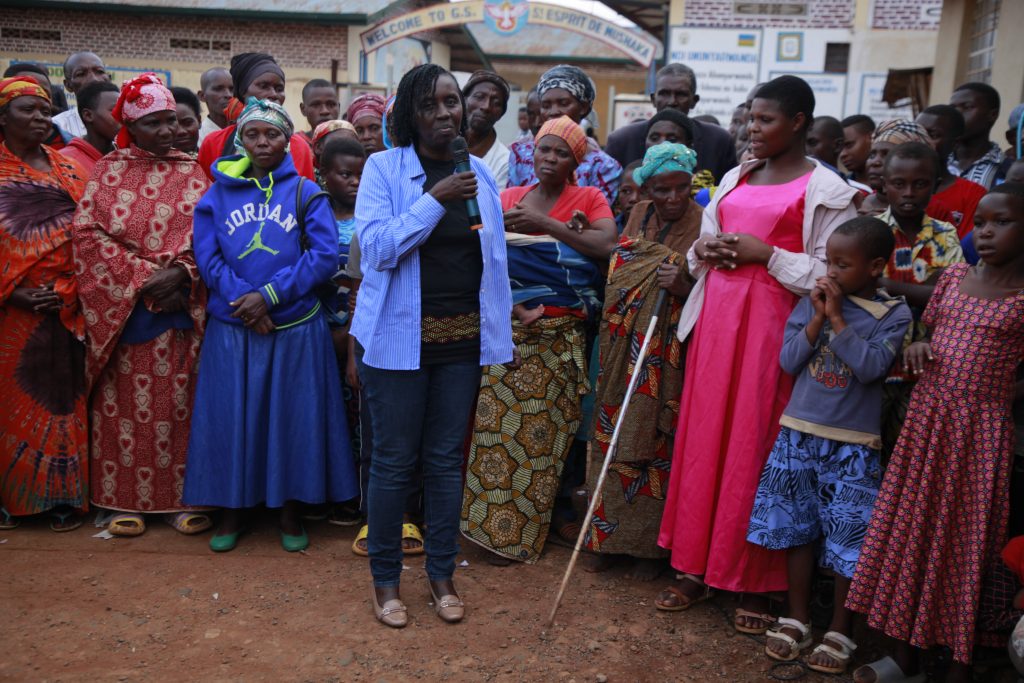
In Rusizi, many children drop out to work in cross-border trade or agriculture. Our Community Mentors and social workers engage directly with parents to challenge this logic.
- We conduct household sensitization campaigns, sitting down with parents to calculate the “cost” of dropout. We show them that the money a child earns selling avocados today is a fraction of what they could earn with a secondary education tomorrow.
- This dialogue is essential for the 542 children we have successfully supported to go back to School (reintegrating into formal education). These reintegrations were only possible because the parents agreed to a “behavior contract”—committing to keep the child in class.
2. Alternative Pathways for Older Youth
For children who have been out of school for too long to join Primary 1, we offer Alternative Learning Pathways (ALP).
- We currently support 974 children in these ALP centers.
- Parental Role: For these students, parental support is even more critical. Many of these youth feel “too old” for school. We work with parents to rebuild the child’s confidence, ensuring they provide the emotional support needed for the youth to stick with the accelerated learning program.
3. Inclusion: Partnering with UPHLS
A major part of our behavior change work focuses on disability. Working with our partner UPHLS, we identify children with disabilities who are hidden at home.
- The Shift: We work with parents to move from “shame” to “advocacy.” We help them understand that their child has a right to learn. By providing the necessary assistive devices and school materials, we remove the physical barriers, but it is the parent’s change of heart that removes the social barrier.
4. Economic Strengthening with ADEPE
We recognize that sometimes, “bad behavior” is just desperation. A parent sends a child to work because there is no food.
- Through our consortium partner ADEPE, we link these vulnerable families to social protection and livelihood opportunities. By stabilizing the family’s economy, we make it “easier” for the parent to adopt the “good behavior” of sending the child to school.
Conclusion: The First Teacher is the Parent
In 2026, the most important desk in Rwanda is not in a classroom; it is the kitchen table where a parent encourages their child to do homework.
The success of the LIFT project in Rusizi—with nearly 1,000 children in ALP and over 500 returning to formal school—proves that parents can change. When they are supported, respected, and shown the value of education, they become the fiercest protectors of their children’s future.
At RODI, alongside our partners ADEPE and UPHLS, we remain committed to this journey. We are not just getting children back to school; we are bringing parents back to the heart of education.
