
Introduction
As Rwanda moves firmly through the implementation of the Second National Strategy for Transformation (NST2) in 2026, the definition of national progress has expanded. While economic indicators like GDP remain crucial, the spotlight has increasingly turned to the “quality of growth”—specifically, how well the nation protects its most vulnerable citizens while empowering them to contribute to the economy. This is the domain of Social Protection.
In 2026, Social Protection in Rwanda is no longer viewed merely as a safety net or a charitable handout. It has evolved into a dynamic engine for poverty reduction, social cohesion, and economic transformation. Under the ambitious goals of Vision 2050, the government and its development partners are working to ensure that every Rwandan has access to a minimum standard of living and the tools necessary to withstand economic shocks, climate disasters, and health crises.
For development practitioners and policymakers, understanding the shifting landscape of social protection is vital. It is about moving beyond “giving fish” to “teaching how to fish,” while ensuring that those who cannot fish are not left behind. This article explores the pillars of social protection in 2026, the specific contributions of civil society, and the path forward for a resilient Rwanda.
Understanding Social Protection and Its Core Pillars
In the Rwandan context, social protection is designed to prevent and reduce poverty, inequality, and social exclusion. By 2026, the sector will be firmly anchored on four strategic pillars, often summarized as Prevention, Protection, Promotion, and Transformation.
- Social Security (Protection): This is the foundation. It provides direct income support to those who are unable to work due to age, severe disability, or chronic illness. It ensures that the ultra-poor have the basic means to survive.
- Social Care Services (Prevention): This pillar targets specific vulnerabilities that money alone cannot fix. It includes psychosocial support for victims of violence, child protection services, and care for older people, preventing long-term social damage.
- Livelihood and Employment Support (Promotion): This is the most dynamic pillar in 2026. It focuses on the “Graduation Model”—providing non-disabled individuals with skills, financial literacy, and assets (like livestock or agricultural inputs) to help them generate their own income and “graduate” out of poverty.
- Disaster and Shock Response (Transformation): As climate change accelerates, this pillar has gained prominence. It involves mechanisms to help households cope with sudden shocks—such as floods or droughts—preventing them from sliding back into poverty.
RODI’s Contribution: Building Pathways to Self-Reliance
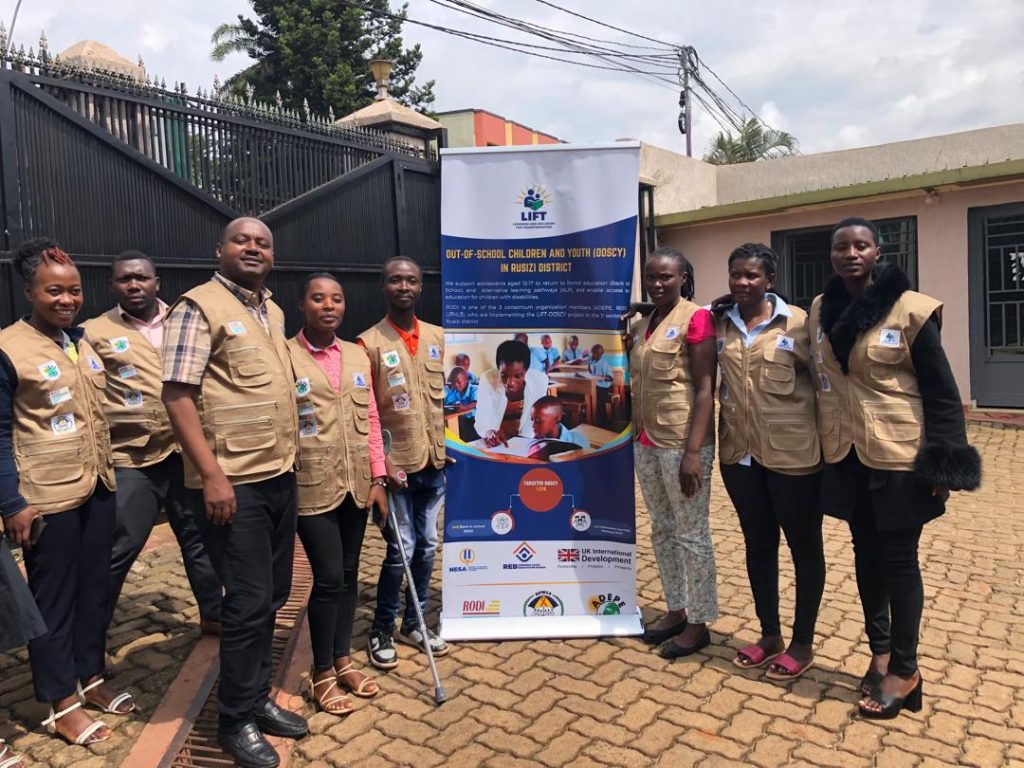
While the government sets the policy framework, Civil Society Organizations (CSOs) are the hands and feet on the ground. The Rwanda Organization for Development Initiatives (RODI) has been instrumental in operationalizing these pillars, particularly through its Humanitarian and Livelihood programs.
RODI’s approach aligns perfectly with the national agenda of self-reliance. Their contribution is best understood through their implementation of high-impact projects that target the intersection of refugees, host communities, and rural poverty.
- The “Graduation” Approach in Action: Through the Poverty Alleviation Coalition (PAC) and the Dukore Twigire Project (DTP), RODI has championed the “Ultra-Poor Graduation” model. These projects do not just provide temporary relief; they offer a comprehensive package. For example, the PAC 2 project supports thousands of refugee and host community households by combining financial support with intensive mentorship and training. The goal is clear: to help families transition from dependence on aid to sustainable self-reliance.
- Empowering the Displaced and Hosts: Social protection in 2026 is inclusive. RODI’s work in the Nyamagabe District, through the Dukore Twigire Project, exemplifies this inclusion. By targeting both forcibly displaced populations (refugees) and their host communities, RODI fosters social cohesion. They provide these groups with sustainable income-generating activities (IGAs), ensuring that refugees are viewed as economic actors rather than burdens.
- Sector-Specific Value Chains: Under the Fair Economic Development Program, RODI addressed the “Promotion” pillar by strengthening the agricultural value chain. By building the capacity of over 25,000 farmers in cooperatives across six districts, they ensured that rural farmers—often the most vulnerable to poverty—could access markets and increase their incomes. This moves beyond simple farming to creating rural businesses.
- Protection for the Most Vulnerable: Aligning with the “Social Care” pillar, RODI implements projects Supporting Victims of Sexual and Gender-Based Violence (SGBV). This involves a comprehensive approach that includes reintegration into the community and addressing social discrimination, ensuring that survivors are protected and empowered to rebuild their lives.
Challenges Facing the Sector in 2026
Despite these successes, the social protection sector faces significant headwinds as we navigate 2026:
- Climate Vulnerability: The frequency of climate shocks (floods, irregular rainfall) threatens to undo gains made in poverty reduction. A family that “graduated” from poverty can easily slide back if a climate disaster destroys their harvest.
- Sustainability of Graduation: One of the biggest questions in 2026 is, “What happens after the project ends?” Ensuring that households maintain their income levels after donor support ceases remains a complex challenge requiring stronger market linkages.
- Funding Gaps: As the number of vulnerable people fluctuates due to global economic instability, the resources available for social protection are often stretched to their limits.
- Fragmentation: Coordination between various stakeholders (government, NGOs, private sector) is improving, but can still result in duplication of efforts or gaps in coverage in certain districts.
Solutions and The Way Forward
To build a truly robust social protection system for the future, a multi-faceted strategy is required:
- Adaptive Social Protection: We must fully integrate climate resilience into social protection. This means promoting Climate-Smart Agriculture—a key focus of RODI’s training programs —to ensure that livelihoods are “shock-proof.”
- Strengthening Market Linkages: It is not enough to teach a refugee how to weave or a farmer how to grow maize; they must have a buyer. Future interventions must focus heavily on the Business Development Service (BDS) support that RODI currently provides, ensuring micro-enterprises are profitable and linked to fundamental markets.
- Digital Innovation: Leveraging technology for the delivery of cash transfers and monitoring of beneficiaries can reduce costs and increase transparency.
- Holistic “Cash Plus” Interventions: Cash alone is rarely enough. The most successful programs in 2026 will continue to bundle cash transfers with “soft” interventions, such as nutrition education, financial literacy, and gender equality training—the exact “holistic support” approach RODI advocates.
Conclusion
In 2026, Social Protection is the bedrock of Rwanda’s stability. It is the promise that no matter how hard the economic winds blow, no citizen will be left without shelter.
Organizations like RODI are demonstrating that, with the right combination of advocacy, capacity building, and community engagement, it is possible to permanently lift the ultra-poor out of poverty. By continuing to innovate in actions—whether through supporting refugees in Nyamagabe or empowering women in agribusiness—we are building a nation that is not just wealthier, but stronger, more inclusive, and truly resilient.
