
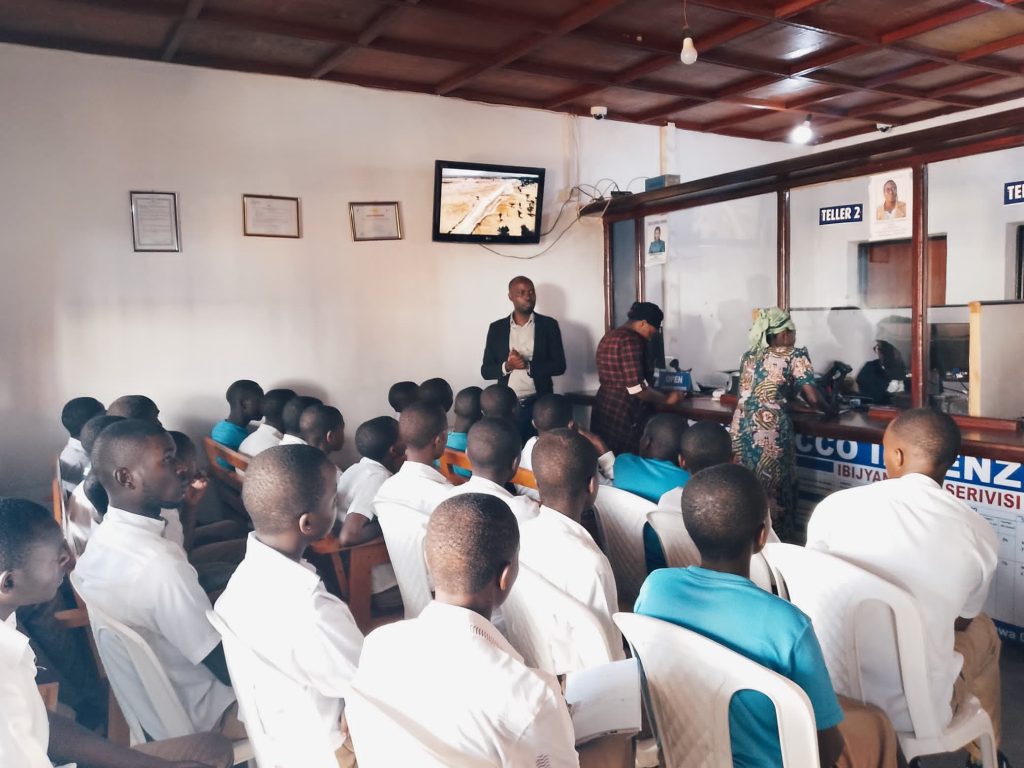
Adolescence is a time of exploration, growth, and identity formation. During these crucial years in school, young people often look to one group more than any other for guidance, validation, and social cues: their peers.
While teachers and parents play an irreplaceable role, research and experience have shown that young people are often more receptive to information when it comes from someone they identify with—someone who shares their experiences, their language, and their reality. This is the core strength of Peer Education.
At the Rwanda Organization for Development Initiatives (RODI Rwanda), we recognize that empowering youth is central to our mission of strengthening communities. By harnessing the power of positive peer influence, we are not just teaching students; we are building a pipeline of future leaders.
A Powerful Partnership: Action in Ruhango District
Implementation is where vision meets reality. In proud partnership with the Gold Youth Agency, we are launching a robust Peer Education program specifically focused on the Byimana and Ruhango sectors.
We believe in working where the students are. We are currently collaborating closely with schools such as GS Ruhango Catholique, GS Muyange, and GS Bukomero. These schools serve as the hubs for our leadership model, creating environments where students take active ownership of their personal development and community influence.
A Model of Growth: The Leadership Ladder
In these schools, we have moved beyond the traditional “one-size-fits-all” approach. Instead, we have implemented a progressive leadership ladder that grows with the student. This structured approach ensures that students are not just participants, but active leaders who evolve as they advance through their education.
Our program supports young people through key stages of their secondary school journey:
- Senior 4 (S4) – Junior Peer Educators: Students in S4 enter the program as “Junior Peer Educators.” At this stage, they are introduced to the core concepts of leadership and peer support. They begin by learning how to influence their immediate circle and participating in foundational training.
- Senior 5 (S5) – Senior Peer Educators: As they advance to S5, these students graduate to become “Senior Peer Educators.” With a year of experience under their belts, they take on more responsibility, helping to organize activities and acting as role models for the incoming Juniors.
- Senior 6 (S6) – Mentors: By their final year in S6, students become “Mentors.” They are the pinnacle of the peer leadership structure within the school. They do not just educate; they guide the younger peer educators, sharing wisdom and helping to sustain the program’s culture after they graduate.
A Robust Support System
We recognize that young leaders cannot thrive in isolation. To ensure the quality and sustainability of our intervention in Ruhango and Byimana sectors, this student-led structure is supported by a strong professional framework:
- Facilitator Interns: The student leaders are directly mentored by Facilitator Interns. These interns bridge the gap between the students and the professional staff, providing day-to-day guidance and technical support.
- Site Coordinators: Our Site Coordinators oversee the entire operation at the school level. They ensure the program aligns with our broader organizational goals and that the peer educators have the necessary resources to succeed.
Building Leaders for Tomorrow
By structuring our program this way, we ensure that leadership is not a one-time event but a journey. An S4 student at GS Ruhango Catholique doesn’t just attend a workshop; they enter a pathway that prepares them to be a Mentor by S6.
This sustainable model is proof that when you trust young people with responsibility and provide them with the proper support structure—and the right partners like Gold Youth Agency—they don’t just succeed; they lead.
