
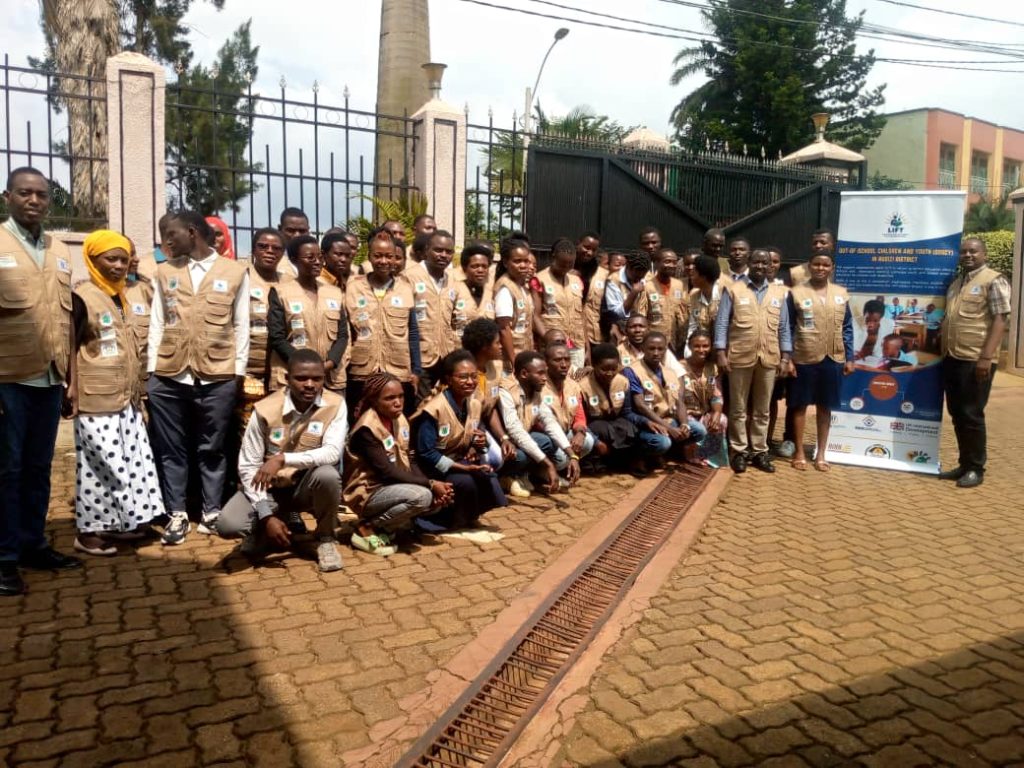
In the world of development, we often talk about high-level strategies, donor funding, and national policies. But in reality, the success of any project—whether it is getting a child back to school or helping a refugee start a business—does not happen in a boardroom. It occurs on a muddy path in a village, on the porch of a small home, or under a tree where a community gathering is held.
It happens because of Community Mentors and Coaches.
At the Rwanda Organization for Development Initiatives (RODI), we view these individuals as the backbone of our impact. They are the “last mile” of development—the bridge that connects a well-designed project to the human reality of a beneficiary. Without them, even the best-funded programs would fail to reach the people who need them most.
This blog post celebrates the critical role of these frontline workers, specifically highlighting the Community Mentors in the LIFT Project and the UPG Coaches in the Dukore Twigire Project.
1. The Eyes and Ears of Education: Community Mentors in the LIFT Project
In Rusizi District, where RODI is implementing the Learning and Inclusion for Transformation (LIFT) project in partnership with ADEPE and UPHLS, the challenge is clear: identifying and supporting Out-of-School Children (OOSCY).
These children are often “invisible” to the formal system. They may be working in rice fields, hiding due to disability stigma, or kept at home due to extreme poverty. A distant project officer cannot find them. But a Community Mentor can.
The Role of the LIFT Mentor:
- Identification: Mentors live in the villages they serve. They know precisely which child stopped going to school last term and why. They are the ones who walk door to door to identify the 1,516 children targeted by the project.
- Negotiation: Getting a child back to school often requires convincing skeptical parents. Mentors sit with families to explain the value of the Alternative Learning Pathways (ALP) centers RODI runs. They act as mediators, addressing parental fears about costs or labor loss.
- Retention: The mentor’s job doesn’t end at enrollment. When a student starts missing classes at the ALP center, the mentor notices immediately. They follow up, resolve the issue, and ensure the child remains on track for reintegration.
In the LIFT project, the Community Mentor is not just a data collector; they are a Guardian of Opportunity, ensuring that no child in Rusizi is left behind.
2. Walking the Path to Self-Reliance: UPG Coaches in the Dukore Twigire Project
While LIFT focuses on education, the Dukore Twigire (“Let’s Work to Become Self-Reliant”) project focuses on economic graduation for refugees and vulnerable host communities. Here, the hero is the UPG (Ultra-Poor Graduation) Coach.
The “Graduation Approach” is intensive. It is not about handing out money and walking away; it is about a journey out of extreme poverty. This journey is scary and challenging, and families cannot walk it alone. They need a guide.
The Role of the UPG Coach:
- Weekly Household Visits: Unlike standard aid workers, UPG Coaches visit their assigned households weekly. They sit with the family, review their savings, check on their health, and discuss hygiene.
- Business Coaching: When a refugee family receives seed capital to start a poultry business or a small shop, the Coach acts as a business consultant. They help the family calculate profits, decide how much to reinvest, and address challenges as they arise.
- Psychosocial Support: Poverty creates despair. A significant role of the Coach is to build confidence. They encourage the family, helping them believe that they can change their situation. They shift the mindset from “dependency” to “self-reliance.”
For the beneficiaries of Dukore Twigire, the UPG Coach is more than a trainer; they are a Partner in Hope. They are the constant presence that reassures a family: “You can do this, and I am here to help you.”
Why They Are the Backbone
Why are these Mentors and Coaches so effective?
- Trust: They are often from the same community. They speak the same dialect, understand the same cultural nuances, and face the same local challenges. A beneficiary will open up to a neighbor in a way they never would to an outsider.
- Proximity: They are there when the office is closed. They see the reality of a household at 7 PM, not just during a scheduled field visit.
- Accountability: They hold RODI accountable to the community and hold the community responsible for its own goals.
RODI’s Commitment: Investing in the Frontline
At RODI, we recognize that we cannot claim success unless we invest in these frontline heroes. That is why we prioritize:
- Continuous Training: We equip our Mentors and Coaches with skills in case management, child protection, conflict resolution, and financial literacy.
- Dignified Support: We ensure they have the tools—bicycles for transport, smartphones for data collection, and airtime—to do their jobs effectively.
Conclusion
When you see a child in Rusizi graduating from an ALP center and returning to formal school, remember the Community Mentor who knocked on their door.
When you see a refugee family in the Dukore Twigire project harvesting their first crop and opening a savings account, remember the UPG Coach who sat with them every week to plan that future.
They are the backbone. They are the hands and feet of development. And at RODI, they are our most valuable partners in building a resilient Rwanda.
